Saturday, March 27, 2004
Fact-checking on Haiti arms
Following the recent departure of Aristide, it seems to have become something of a quasi-fact in certain progressive quarters that the U.S. supplied weapons to the rebels--that's right, those cash-starved, drug-trafficking thugs who still haven't been convinced to disarm. The best evidence so far was admittedly circumstantial, and provided by Aristide's lawyer, Ira Kurzban. To give just one example, here's the way the Toronto Star reported it:
"There's a lot of circumstantial evidence that the U.S.A. might have had a hand in it," Kuzban says.
He notes, for example, that the U.S. announced late last year that it was providing some 20,000 M16 rifles to the armed forces of the Dominican Republic, which shares the island of Hispaniola with Haiti.
He speculates that some of these weapons may have found their way to Haitian exiles based on the Dominican side of border, the very exiles who marched across the border last month to join a violent uprising in central Haiti.
Armed in many cases with M-16s, they quickly outgunned the country's ill-equipped police and soon controlled much of central and northern Haiti.
Within a couple of weeks, they were poised to invade the capital."
The logic of this sounds plausible, right? Well, except for one inconvenient fact: "The M-16s have yet to arrive," according to Rachel Stohl, senior analyst at the Center for Defense Information in Washington. Stohl does nevertheless warn against the potential diversion of these arms to Haiti, and says that "at the very least, the gun transfer to the Dominican Republic should be delayed, if not canceled entirely."
That's a reasonable idea, and based on solid information. As for Aristide's lawyer, I wonder what other assumptions he's gotten wrong?
NOTE: Here's a moderately hopeful story on Haiti by Jane Regan, who's writing regularly for Interpress Service. Hope in Haiti means a return to normalcy, which is not saying much...
Comments to dlholiday@yahoo.com
"There's a lot of circumstantial evidence that the U.S.A. might have had a hand in it," Kuzban says.
He notes, for example, that the U.S. announced late last year that it was providing some 20,000 M16 rifles to the armed forces of the Dominican Republic, which shares the island of Hispaniola with Haiti.
He speculates that some of these weapons may have found their way to Haitian exiles based on the Dominican side of border, the very exiles who marched across the border last month to join a violent uprising in central Haiti.
Armed in many cases with M-16s, they quickly outgunned the country's ill-equipped police and soon controlled much of central and northern Haiti.
Within a couple of weeks, they were poised to invade the capital."
The logic of this sounds plausible, right? Well, except for one inconvenient fact: "The M-16s have yet to arrive," according to Rachel Stohl, senior analyst at the Center for Defense Information in Washington. Stohl does nevertheless warn against the potential diversion of these arms to Haiti, and says that "at the very least, the gun transfer to the Dominican Republic should be delayed, if not canceled entirely."
That's a reasonable idea, and based on solid information. As for Aristide's lawyer, I wonder what other assumptions he's gotten wrong?
NOTE: Here's a moderately hopeful story on Haiti by Jane Regan, who's writing regularly for Interpress Service. Hope in Haiti means a return to normalcy, which is not saying much...
Comments to dlholiday@yahoo.com
Quote of the Day
"If we were doing an ad the headline would be 'Goliath demands slingshots be confiscated.' It's very worrisome this idea that opposition voices would be silenced and stripped of the ability to talk about powerful men."
--This is not about the FMLN leadership's reaction to those in the party who call for early party elections, but it could be. It's from Wes Boyd, co-founder of moveon.org, commenting on Republican accusations that their ads and those of the Media Fund help Democrats evade campaign finance laws.
Comments to dlholiday@yahoo.com
--This is not about the FMLN leadership's reaction to those in the party who call for early party elections, but it could be. It's from Wes Boyd, co-founder of moveon.org, commenting on Republican accusations that their ads and those of the Media Fund help Democrats evade campaign finance laws.
Comments to dlholiday@yahoo.com
Friday, March 26, 2004
The U.S. and Double Standards
"I think that we can't get too bogged down on political campaign rhetoric. I mean, even in this country, sometimes politicians say things in campaigns that somehow they find unable to do later on -- I'm sure, you know, against their wishes. Let's face it, people change. Sometimes people have to change a position based on the circumstances that they encounter when they come to power."
--Otto Reich, in response to a question prior to the Brazilian elections as to whether Brazil's commitment to a hemisphere-wide trade agreement would be as strong regardless of who wins, July 12, 2002.
Brazil is a large and powerful country, with the world's fifth largest economy, so Reich treaded softly (at least in this particular statement) at the prospect of a Lula victory. El Salvador is a small, seemingly insignificant country compared to Brazil. But it's also the Latin American country which has been most consistently in the U.S. camp on just about any issue you can think of. Perhaps that's one reason that Otto Reich, who just one week before the elections in El Salvador felt it necessary to be quite a bit less diplomatic about a possible FMLN victory. Reich's statements didn't flow from some wellspring of principle. He said what he did in El Salvador because he could.
Marcela Sanchez comments in today's Washington Post that Bush administration officials and congressional allies "felt compelled to become shamelessly involved" in the Salvador elections in order to slow the leftward slide in the region. But that this will not work in countries like Uruguay, Panama and the Dominican Republic, where the left is more likely to win in part due to fear of "U.S.-touted economic models," and where the U.S. has less influence. "In the long run," writes Sanchez, "El Salvador would have been better served had the U.S. officials defended the merits of the plan and proclaimed Washington's full commitment to approve it -- a commitment many voters believe simply does not exist." Now there's a radical concept--engage in the positive promotion of U.S. policy, instead of denigrating anyone who chooses to differ.
Indeed, El Salvador already reflects the worst of U.S. negative political campaign culture--these days they also have to endure the lies and spin doctors of foreign actors. Believe me, ARENA and its friends were already doing a pretty good job, having thrown away the rule book (i.e., the Electoral Code) in order to win at any cost. Henry Campos, law professor at the UCA and former prosecutor in the Jesuit case, notes this fact in his column today in LPG, saying "some politicians seem to think that that law should be violated when it gets in the way," and goes on to enumerate a long list of violations to the Electoral Code that were committed during this campaign.
By the way, we don't have an election report from the OAS yet. Will it mention these campaign illegalities, and the failure of the TSE to address them (two cases resolved out of some 50 complaints that were filed)?
POSTSCRIPT: EDH shamelessly entitles Marcela Sanchez's column, "Easy Triumph for ARENA." The title she originally used for the Washington Post was "Interference in El Salvador Won't Work Elsewhere."
Comments to dlholiday@yahoo.com
--Otto Reich, in response to a question prior to the Brazilian elections as to whether Brazil's commitment to a hemisphere-wide trade agreement would be as strong regardless of who wins, July 12, 2002.
Brazil is a large and powerful country, with the world's fifth largest economy, so Reich treaded softly (at least in this particular statement) at the prospect of a Lula victory. El Salvador is a small, seemingly insignificant country compared to Brazil. But it's also the Latin American country which has been most consistently in the U.S. camp on just about any issue you can think of. Perhaps that's one reason that Otto Reich, who just one week before the elections in El Salvador felt it necessary to be quite a bit less diplomatic about a possible FMLN victory. Reich's statements didn't flow from some wellspring of principle. He said what he did in El Salvador because he could.
Marcela Sanchez comments in today's Washington Post that Bush administration officials and congressional allies "felt compelled to become shamelessly involved" in the Salvador elections in order to slow the leftward slide in the region. But that this will not work in countries like Uruguay, Panama and the Dominican Republic, where the left is more likely to win in part due to fear of "U.S.-touted economic models," and where the U.S. has less influence. "In the long run," writes Sanchez, "El Salvador would have been better served had the U.S. officials defended the merits of the plan and proclaimed Washington's full commitment to approve it -- a commitment many voters believe simply does not exist." Now there's a radical concept--engage in the positive promotion of U.S. policy, instead of denigrating anyone who chooses to differ.
Indeed, El Salvador already reflects the worst of U.S. negative political campaign culture--these days they also have to endure the lies and spin doctors of foreign actors. Believe me, ARENA and its friends were already doing a pretty good job, having thrown away the rule book (i.e., the Electoral Code) in order to win at any cost. Henry Campos, law professor at the UCA and former prosecutor in the Jesuit case, notes this fact in his column today in LPG, saying "some politicians seem to think that that law should be violated when it gets in the way," and goes on to enumerate a long list of violations to the Electoral Code that were committed during this campaign.
By the way, we don't have an election report from the OAS yet. Will it mention these campaign illegalities, and the failure of the TSE to address them (two cases resolved out of some 50 complaints that were filed)?
POSTSCRIPT: EDH shamelessly entitles Marcela Sanchez's column, "Easy Triumph for ARENA." The title she originally used for the Washington Post was "Interference in El Salvador Won't Work Elsewhere."
Comments to dlholiday@yahoo.com
Thursday, March 25, 2004
Reflecting on Romero, and the left
It's far too easy for me to focus on the egotistical politicking of Salvadoran elites --both left and right-- but I'm not always so directly exposed to the everyday lives of those who find comfort in one or another of these political positions. A friend, Kathy Ogle --who, incidentally, translated a wonderful book about Romero, called "Memories in Mosaic" -- observed some of the reactions of the faithful who celebrated the anniversary of Romero and offered these reflections:
"The Romero event yesterday morning was well attended so I assume the afternoon-evening march was as well. I was moved by seeing tears rolling down Evelia's face as she looked at a picture of Monsenor Romero in his little house at Divina Providencia and reflected that El Salvador didn't seem to be much closer to his dreams now than it was in 1980. "Yo realmente creia que este era el momento [I truly thought that this was the moment]," she said. She said she couldn't sleep the night before thinking of how they could have lost so badly. In spite of her early reflexive assertions of fraud as a cause, she also knows that a heck of a lot of people just plain voted ARENA. It's just hard to accept.
Another friend who was an FMLN representative at a polling station in Zacamil told me his first reaction was anger. He thought, "Este pueblo está jodido y merece lo que le venga." [People here are screwed up and deserve what's coming to them.] Then on further reflection he said he decided he was wrong to blame the people.
I'm sure people will be reeling for quite a while and I hope some of the level of reflection that happens in the intellectual and leadership circles also filters down/over to the grassroots. Likewise, I hope the crushing problems and the frustrations of the poor will continue to have a central place in reflections of leadership and analysts. I do feel hopeful that these will both happen."
Comments to dlholiday@yahoo.com
"The Romero event yesterday morning was well attended so I assume the afternoon-evening march was as well. I was moved by seeing tears rolling down Evelia's face as she looked at a picture of Monsenor Romero in his little house at Divina Providencia and reflected that El Salvador didn't seem to be much closer to his dreams now than it was in 1980. "Yo realmente creia que este era el momento [I truly thought that this was the moment]," she said. She said she couldn't sleep the night before thinking of how they could have lost so badly. In spite of her early reflexive assertions of fraud as a cause, she also knows that a heck of a lot of people just plain voted ARENA. It's just hard to accept.
Another friend who was an FMLN representative at a polling station in Zacamil told me his first reaction was anger. He thought, "Este pueblo está jodido y merece lo que le venga." [People here are screwed up and deserve what's coming to them.] Then on further reflection he said he decided he was wrong to blame the people.
I'm sure people will be reeling for quite a while and I hope some of the level of reflection that happens in the intellectual and leadership circles also filters down/over to the grassroots. Likewise, I hope the crushing problems and the frustrations of the poor will continue to have a central place in reflections of leadership and analysts. I do feel hopeful that these will both happen."
Comments to dlholiday@yahoo.com
Wednesday, March 24, 2004
Remembering Msgr. Romero
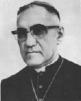
"One of the signs of the present time is the idea of participation, the right that all persons have to participate in the construction of their own common good. For this reason, one of the most dangerous abuses of the present time is repression, the attitude that says, "Only we can govern, no one else, get rid of them."
Everyone can contribute much that is good, and in that way trust is achieved. The common good will not be attained by excluding people. We can't enrich the common good of our country by driving out those we don't care for. We have to try to bring out all that is good in each person and try to develop an atmosphere of trust, not with physical force, as though dealing with irrational beings, but with a moral force that draws out the good that is in everyone, especially in concerned young people.
Thus, with all contributing their own interior life, their own responsibility, their own way of being, all can build the beautiful structure of the common good, the good that we construct together and that creates conditions of kindness, of trust, of freedom, of peace.
Then we can, all of us together, build the republic -- the res publica, the public concern -- what belongs to all of us and what we all have the duty of building."
Oscar Arnulfo Romero, Archbishop of San Salvador, July 10, 1977; assassinated March 24, 1980.
Comments to dlholiday@yahoo.com
Quote of the Day
"Schafik got far more than the 'hard' votes of the FMLN, and I think that those votes weren't for him but rather against ARENA. In this election, many people held their noses when they went to vote because they were doing something they didn't like. That happened on both sides. People held their noses when they voted for Tony Saca as well, because they didn't like ARENA, but they were afraid of Schafik or they didn't want to take any chances."
--from an interview with Bill Barnes (political scientist, lawyer and frequent Salvadoran election pollster), in today's La Prensa Gráfica
Runner-up
"It was as if Osama bin Laden, hidden in some high mountain redoubt, were engaging in long-range mind control of George Bush, chanting 'invade Iraq, you must invade Iraq.'"
--Richard A. Clarke, George W.'s former counterterrorism coordinator, in his new book, cited by Barton Gellman in today's Washington Post.
Comments to dlholiday@yahoo.com
--from an interview with Bill Barnes (political scientist, lawyer and frequent Salvadoran election pollster), in today's La Prensa Gráfica
Runner-up
"It was as if Osama bin Laden, hidden in some high mountain redoubt, were engaging in long-range mind control of George Bush, chanting 'invade Iraq, you must invade Iraq.'"
--Richard A. Clarke, George W.'s former counterterrorism coordinator, in his new book, cited by Barton Gellman in today's Washington Post.
Comments to dlholiday@yahoo.com
Commenting on Dean Brackley's analysis
Here's a comment on Dean Brackley's post from last night, from Paolo Luers, who recently began writing an interesting weekly column in El Faro on matters related to the press. (This week's column takes to task the influential television news host, Mauricio Funes, for coming out with "exit polls" on Sunday favoring the FMLN that were rife with statistical errors. That move was a serious error by Funes, and caused quite a stir for several hours):
Very interesting pinpointing the difference between "awakening" and the shift of voters to ARENA out of fear. I think you have a point there.
But I have two serious doubts. 1) I wouldn´t call this long-term shift to the opposition an "awakening." Too deterministic. As if there is only one truth and it is only a question of time that people wake up to it…. But I agree, there is a long-term shift toward those who press for social reforms. Which is sort of unavoidable after 15 years of neo-liberal reforms….
2) You are also right about the factor of fear being the driving factor behind the short-term support for ARENA. But then fear is always one of the most important factors in elections. Fear for your work place, fear for the future of health care and your pension fund, etc., will be decisive in elections in Germany and El Salvador alike. If you run for president and don't offer answers to those fears, you loose. Here and anywhere. And if you offer answers which increase those fears, you loose big….
And then: Schafik Handal didn´t need all this big anti-communist campaign to scare people. He does that all by himself.
I agree with the conclusion: "So, I expect the left and center-left will continue to do well, and even advance". There is that possibility. There is that chance. There is that challenge. Challenge, because it´s certainly not going to be automatically so. Only if the left stops scaring people with irresponsible populist demands and starts offering real solutions to the problems that generate fears.
Comments to dlholiday@yahoo.com
Very interesting pinpointing the difference between "awakening" and the shift of voters to ARENA out of fear. I think you have a point there.
But I have two serious doubts. 1) I wouldn´t call this long-term shift to the opposition an "awakening." Too deterministic. As if there is only one truth and it is only a question of time that people wake up to it…. But I agree, there is a long-term shift toward those who press for social reforms. Which is sort of unavoidable after 15 years of neo-liberal reforms….
2) You are also right about the factor of fear being the driving factor behind the short-term support for ARENA. But then fear is always one of the most important factors in elections. Fear for your work place, fear for the future of health care and your pension fund, etc., will be decisive in elections in Germany and El Salvador alike. If you run for president and don't offer answers to those fears, you loose. Here and anywhere. And if you offer answers which increase those fears, you loose big….
And then: Schafik Handal didn´t need all this big anti-communist campaign to scare people. He does that all by himself.
I agree with the conclusion: "So, I expect the left and center-left will continue to do well, and even advance". There is that possibility. There is that chance. There is that challenge. Challenge, because it´s certainly not going to be automatically so. Only if the left stops scaring people with irresponsible populist demands and starts offering real solutions to the problems that generate fears.
Comments to dlholiday@yahoo.com
FMLN: the struggle within begins
The papers are full of news about internal struggles, led by Oscar Ortiz (mayor of Santa Tecla), but apparently with some degree of support. He's calling for the immediate resignation of the political commission, its replacement with a transitory commission, and early elections for new leadership within three months. Julio Hernández, the FMLN magistrate on the Supreme Electoral Tribunal, apparently resigned in disgust last Monday, after it became clear that the Political Commission of the FMLN was not willing to accept any responsibility for their defeat.
Also for the first time, there is public discussion about the FMLN's primary elections last summer, in which Schafik defeated Ortiz by a small margin. There has been a secreto a voces for a long time that those elections were rigged, but now even Ortiz is hinting at it. The municipal coordinator of the FMLN for San Salvador, who was sanctioned last year by the FMLN for speaking out of turn (i.e., suggesting that a Handal candidacy might be succeed), is even blunter, alleging that fraud was perpetrated in the past two FMLN internal electoral processes.
This cartoon from La Prensa Gráfica says it all:

Comments to dlholiday@yahoo.com
Also for the first time, there is public discussion about the FMLN's primary elections last summer, in which Schafik defeated Ortiz by a small margin. There has been a secreto a voces for a long time that those elections were rigged, but now even Ortiz is hinting at it. The municipal coordinator of the FMLN for San Salvador, who was sanctioned last year by the FMLN for speaking out of turn (i.e., suggesting that a Handal candidacy might be succeed), is even blunter, alleging that fraud was perpetrated in the past two FMLN internal electoral processes.
This cartoon from La Prensa Gráfica says it all:
Comments to dlholiday@yahoo.com
Tuesday, March 23, 2004
Further election thoughts from a friend
I received these insightful comments on the elections from Dean Brackley, S.J., who has lived in El Salvador since 1990 :
"It is clear that the during the last couple of years the urban population experienced a political awakening ("conscientization"), largely thanks to dollarization and the health crisis. That is reflected clearly in last year's elections (although the rural protest vote went to PCN, not to the left) and subsequent polls which so alarmed former Ambassador Rose Likens and her friends at the State Dept.
From my experience in the Bronx, here, and elsewhere, I think such awakenings are durable. What I sensed in recent months is that in urban areas people were losing their fear of discussing the possibility of voting for the left and were communicating about politics. (That is what I found, for example, in a poor community I work in close to major military installations, where FMLN flags began to appear as never before.)
That erosion of fear and political awakening was reflected in last year's election results, in the post-election polls and in this year's 50% increase in the vote for the FMLN. So, I think this vote increase is fairly durable, whereas the enormous increase in votes for ARENA probably includes many people who would have abstained if they had not been scared by the campaign propaganda: there'll be disturbances, maybe even more war; El Salvador will become another Cuba; remesas will be cut off and Salvadorans deported from the U.S. (Many employers pressured, cajoled and even threatened employees to keep them from voting for the left.)
Fear-filled conversations about these dire possibilities also spread through poor and working communities in the last two months. That helped produce votes but not an awakening. To that extent, these votes do not reflect lasting gains for ARENA. Although I think the fears can be revived in a future presidential election, I don't think they work for local (municipal and assembly) elections.
So, I expect the left and center-left will continue to do well, and even advance, at those levels in the future, unless ARENA's policies change notably. I believe this in part because I believe many people who were dragged out to vote by fear will withdraw into abstencionismo in future local elections.
Since these fears can be revived and since politics now passes through the media, the FMLN will not be able to win a presidential election alone in the foreseeable future, certainly not with a candidate like Schafik. And, if they'd won this time, they would have been mercilessly blamed for a disastrous economic situation and have little possibility for passing any legislation."
Comments to dlholiday@yahoo.com
"It is clear that the during the last couple of years the urban population experienced a political awakening ("conscientization"), largely thanks to dollarization and the health crisis. That is reflected clearly in last year's elections (although the rural protest vote went to PCN, not to the left) and subsequent polls which so alarmed former Ambassador Rose Likens and her friends at the State Dept.
From my experience in the Bronx, here, and elsewhere, I think such awakenings are durable. What I sensed in recent months is that in urban areas people were losing their fear of discussing the possibility of voting for the left and were communicating about politics. (That is what I found, for example, in a poor community I work in close to major military installations, where FMLN flags began to appear as never before.)
That erosion of fear and political awakening was reflected in last year's election results, in the post-election polls and in this year's 50% increase in the vote for the FMLN. So, I think this vote increase is fairly durable, whereas the enormous increase in votes for ARENA probably includes many people who would have abstained if they had not been scared by the campaign propaganda: there'll be disturbances, maybe even more war; El Salvador will become another Cuba; remesas will be cut off and Salvadorans deported from the U.S. (Many employers pressured, cajoled and even threatened employees to keep them from voting for the left.)
Fear-filled conversations about these dire possibilities also spread through poor and working communities in the last two months. That helped produce votes but not an awakening. To that extent, these votes do not reflect lasting gains for ARENA. Although I think the fears can be revived in a future presidential election, I don't think they work for local (municipal and assembly) elections.
So, I expect the left and center-left will continue to do well, and even advance, at those levels in the future, unless ARENA's policies change notably. I believe this in part because I believe many people who were dragged out to vote by fear will withdraw into abstencionismo in future local elections.
Since these fears can be revived and since politics now passes through the media, the FMLN will not be able to win a presidential election alone in the foreseeable future, certainly not with a candidate like Schafik. And, if they'd won this time, they would have been mercilessly blamed for a disastrous economic situation and have little possibility for passing any legislation."
Comments to dlholiday@yahoo.com
Monday, March 22, 2004
Preguntas sin respuestas
There are many questions that need to be answered before we can fully understand these elections. Likewise, there are many questions about the future, about which we can only speculate at the moment. Here's a list of a few of them.
About the current election:
* Who were the new voters? Were they young people, who picked up their DUI because they needed it for other things, and then decided to vote?
* What happened to the votes from the center coalition--did they migrate left or right, or both?
* What were the most important factors that motivated all the new voters for ARENA? Fear of communism (and accompanying rumors)? Fear of remittances ending/fear of ending temporary residential status of Salvadorans in the US?
* How did the statements by various U.S. officials (State Dept. and congressmen) play out in the minds of voters?
About the future:
* What role will the past and the war play in future campaigns?
* Will Tony Saca prove to be as open to discussion and concertación (consensus-building) as he currently proclaims?
* How will the FMLN react to this loss? Will it reform its leadership, or will Handal hold on to power?
* What's the future of the center parties (PDC and CDU)?
* Under what circumstances would the wealthy elites in El Salvador accept a win by a "left" alternative? If a moderate left force runs in 2009, would that be enough, or would they be villified as well?
Comments to dlholiday@yahoo.com
About the current election:
* Who were the new voters? Were they young people, who picked up their DUI because they needed it for other things, and then decided to vote?
* What happened to the votes from the center coalition--did they migrate left or right, or both?
* What were the most important factors that motivated all the new voters for ARENA? Fear of communism (and accompanying rumors)? Fear of remittances ending/fear of ending temporary residential status of Salvadorans in the US?
* How did the statements by various U.S. officials (State Dept. and congressmen) play out in the minds of voters?
About the future:
* What role will the past and the war play in future campaigns?
* Will Tony Saca prove to be as open to discussion and concertación (consensus-building) as he currently proclaims?
* How will the FMLN react to this loss? Will it reform its leadership, or will Handal hold on to power?
* What's the future of the center parties (PDC and CDU)?
* Under what circumstances would the wealthy elites in El Salvador accept a win by a "left" alternative? If a moderate left force runs in 2009, would that be enough, or would they be villified as well?
Comments to dlholiday@yahoo.com
Conservative Central America...
Manuel Orozco of Georgetown University responds to my previous post:
"...I do agree with all you say, what I would add to that is one issue. The election reflects an issue we are reluctant to recognize: Central Americans are fairly conservative people, ideologically and behaviorally, and their support to ARENA illustrates it. The victory wasn't simply about uncertainty, but also about a conservative ideology that permeates in people's minds. From a regional perspective, I do think another important factor to consider is that being conservative doesn't render them anti-democratic. Both the rejections of Handal and Rios-Montt are important considerations about a decision to do away with traditional caudillos. We will see the rejection of Hipolito Mejía in May as another example. I think this will also be an important test in the Nicaraguan elections, as well as to Panama's."
Comments to dlholiday@yahoo.com
"...I do agree with all you say, what I would add to that is one issue. The election reflects an issue we are reluctant to recognize: Central Americans are fairly conservative people, ideologically and behaviorally, and their support to ARENA illustrates it. The victory wasn't simply about uncertainty, but also about a conservative ideology that permeates in people's minds. From a regional perspective, I do think another important factor to consider is that being conservative doesn't render them anti-democratic. Both the rejections of Handal and Rios-Montt are important considerations about a decision to do away with traditional caudillos. We will see the rejection of Hipolito Mejía in May as another example. I think this will also be an important test in the Nicaraguan elections, as well as to Panama's."
Comments to dlholiday@yahoo.com
Massive ARENA victory: some preliminary thoughts
With 96.59 percent of the numbers in, the Supreme Electoral Tribunal (TSE) reports on their website the following information:
ARENA: 1,190,235 -- 57.73
FMLN: 734,469 -- 35.63
CDU-PDC: 80,592 -- 3.91
PCN: 56,289 -- 2.73
By 7:30 last night, an hour before the TSE gave its first set of election returns, Tony Saca claimed victory. Three hours later, Schafik Handal accepted his defeat, but refused to congratulate Saca, saying his victory was a triumph of "fear and blackmail." He then pledged to his supporters: "If they think they're going to try to govern the country with that kind of fear and blackmail, then the country will suffer, because here there's going to be a resistence without respite."
Out of an electoral register of more than 3.4 million voters, more than 2.1 million voted, compared to nearly 1.4 million last March. I'll post the exact figures later, but in real numbers, this means there was a 50 percent increase in the actual turnout, far more than had ever before voted.
This is an important element of yesterday's story -- the voter turnout is nothing less than amazing. Yesterday's turnout is about 62% of registered voters, but this doesn't begin to tell the whole story. ARENA more than doubled its number of voters from the 2003 election, while the FMLN grew some 50% (again, roughly speaking).
Relatively few anomalies have been reported thus far, which I think we would have heard about given the full-day coverage from three major television networks, with correspondents scattered throughout the country.
Of course, the government should feel very silly (to be polite) at this point regarding their paranoia about international observers coming to the country to interfere with the electoral process, which led them to create unprecedented difficulties arriving at the airport. From a quick glance at the online version of La Prensa Gráfica, I can find no reports of international observers getting into trouble.
In terms of percentage of eligible voters, participation had declined from 1994 high of 52.65% (why everyone here is using two digit decimal points, I don't know). That percentage is somewhat deflated, however, because the old electoral registry was never consistently updated to exclude those who'd died or moved to the U.S., for example.
The current electoral registry was based on the Single Identity Document (known as the DUI, Documento Unico de Identidad), just issued in the past couple of years, and which is produced under a more pro-active system in which those who died will be regularly deleted from their rolls. This proved to be quite efficient--the lists were displayed outside each voting place, and people could find not only their names, but their photos to figure out where to vote.

At each voting table, workers also were able to compare the name and photo on their laminated DUI with their computer printout, which also generated photos of each voter.
Assuming the results hold --on Tuesday the TSE begins a final official tally that usually takes several days -- both the CDU and PDC will lose their political party status, as will the PCN. Parties have to get 3% of the overall vote to stay alive, but in the case of a two-party coalition, they need 6%. The demise of the historic PDC, founded in 1960 (why LPG says 1946 is a mystery) along with the CDU may pave the way for the formation of a new center-left party to battle the FMLN for the political space on the left, a notion that many coalition leaders have been discussing in recent weeks. First, it was thought, they would each get their houses in order, then work toward the better definition of an alternative. However, these results put them in a significantly weaker position.
It seems clear that because only the presidency was at stake yesterday, the polarized nature of this society --one which was thought to have been healed from the war-- was underscored. This campaign was highly charged with images of war and the past -- thanks largely to ARENA's campaign, which capitalized on the left's inoportune postulation of such a historic Communist figure as Handal. In the mid 1970s, Foucault inverted Clausewitz's formulation, noting that "politics is war by other means," and this aptly describes the way ARENA approached this campaign. (Note that the Central American who popularized this inversion of Clausewitz was Guatemalan General Gramajo, who died last week along with his son after being attacked by bees.) The image of a clean-shaven professional communicator, just under 40 years old, with no real ties to the past vs. the bearded septuagenarian and historic leader of the Communist party was easily exploited as a choice between the future and the past.
I think Schafik's analysis is essentially accurate -- Salvadorans continue to be frustrated with the economy and lack of opportunities, but it was fear of the unknown that was the key factor yesterday. In El Salvador, great power is invested in the presidency, so people saw this as a fairly black and white choice. Nevertheless, you will not have a situation like this --in which voters go to the polls only to vote for a president-- in another ten years. In two years, 2006, there will be legislative and municipal elections. If last year is any indication, voters will once again prefer to spread their votes out among a number of parties, and maintain the kind of pluralism in the Assembly that currently exists. That is, unless Tony Saca is actually able to deliver on some of his promises and people start seeing some real improvements.
In 2009, the elections will include contests at all levels -- municipal, legislative and presidential. A lot could happen between now and then, and I won't even begin to speculate. But should the left get its act together --which means renewing its leadership, bringing in new faces unassociated with the war, broaden its base and democratizing the party and, most importantly, coming up with an economic project that does not scare the living daylights out of the private sector -- they could be well-placed to beat the party that will have governed El Salvador for the past 20 years.
After all, ARENA can't rule forever, can it?
Comments to dlholiday@yahoo.com
ARENA: 1,190,235 -- 57.73
FMLN: 734,469 -- 35.63
CDU-PDC: 80,592 -- 3.91
PCN: 56,289 -- 2.73
By 7:30 last night, an hour before the TSE gave its first set of election returns, Tony Saca claimed victory. Three hours later, Schafik Handal accepted his defeat, but refused to congratulate Saca, saying his victory was a triumph of "fear and blackmail." He then pledged to his supporters: "If they think they're going to try to govern the country with that kind of fear and blackmail, then the country will suffer, because here there's going to be a resistence without respite."
Out of an electoral register of more than 3.4 million voters, more than 2.1 million voted, compared to nearly 1.4 million last March. I'll post the exact figures later, but in real numbers, this means there was a 50 percent increase in the actual turnout, far more than had ever before voted.
This is an important element of yesterday's story -- the voter turnout is nothing less than amazing. Yesterday's turnout is about 62% of registered voters, but this doesn't begin to tell the whole story. ARENA more than doubled its number of voters from the 2003 election, while the FMLN grew some 50% (again, roughly speaking).
Relatively few anomalies have been reported thus far, which I think we would have heard about given the full-day coverage from three major television networks, with correspondents scattered throughout the country.
Of course, the government should feel very silly (to be polite) at this point regarding their paranoia about international observers coming to the country to interfere with the electoral process, which led them to create unprecedented difficulties arriving at the airport. From a quick glance at the online version of La Prensa Gráfica, I can find no reports of international observers getting into trouble.
In terms of percentage of eligible voters, participation had declined from 1994 high of 52.65% (why everyone here is using two digit decimal points, I don't know). That percentage is somewhat deflated, however, because the old electoral registry was never consistently updated to exclude those who'd died or moved to the U.S., for example.
The current electoral registry was based on the Single Identity Document (known as the DUI, Documento Unico de Identidad), just issued in the past couple of years, and which is produced under a more pro-active system in which those who died will be regularly deleted from their rolls. This proved to be quite efficient--the lists were displayed outside each voting place, and people could find not only their names, but their photos to figure out where to vote.
At each voting table, workers also were able to compare the name and photo on their laminated DUI with their computer printout, which also generated photos of each voter.
Assuming the results hold --on Tuesday the TSE begins a final official tally that usually takes several days -- both the CDU and PDC will lose their political party status, as will the PCN. Parties have to get 3% of the overall vote to stay alive, but in the case of a two-party coalition, they need 6%. The demise of the historic PDC, founded in 1960 (why LPG says 1946 is a mystery) along with the CDU may pave the way for the formation of a new center-left party to battle the FMLN for the political space on the left, a notion that many coalition leaders have been discussing in recent weeks. First, it was thought, they would each get their houses in order, then work toward the better definition of an alternative. However, these results put them in a significantly weaker position.
It seems clear that because only the presidency was at stake yesterday, the polarized nature of this society --one which was thought to have been healed from the war-- was underscored. This campaign was highly charged with images of war and the past -- thanks largely to ARENA's campaign, which capitalized on the left's inoportune postulation of such a historic Communist figure as Handal. In the mid 1970s, Foucault inverted Clausewitz's formulation, noting that "politics is war by other means," and this aptly describes the way ARENA approached this campaign. (Note that the Central American who popularized this inversion of Clausewitz was Guatemalan General Gramajo, who died last week along with his son after being attacked by bees.) The image of a clean-shaven professional communicator, just under 40 years old, with no real ties to the past vs. the bearded septuagenarian and historic leader of the Communist party was easily exploited as a choice between the future and the past.
I think Schafik's analysis is essentially accurate -- Salvadorans continue to be frustrated with the economy and lack of opportunities, but it was fear of the unknown that was the key factor yesterday. In El Salvador, great power is invested in the presidency, so people saw this as a fairly black and white choice. Nevertheless, you will not have a situation like this --in which voters go to the polls only to vote for a president-- in another ten years. In two years, 2006, there will be legislative and municipal elections. If last year is any indication, voters will once again prefer to spread their votes out among a number of parties, and maintain the kind of pluralism in the Assembly that currently exists. That is, unless Tony Saca is actually able to deliver on some of his promises and people start seeing some real improvements.
In 2009, the elections will include contests at all levels -- municipal, legislative and presidential. A lot could happen between now and then, and I won't even begin to speculate. But should the left get its act together --which means renewing its leadership, bringing in new faces unassociated with the war, broaden its base and democratizing the party and, most importantly, coming up with an economic project that does not scare the living daylights out of the private sector -- they could be well-placed to beat the party that will have governed El Salvador for the past 20 years.
After all, ARENA can't rule forever, can it?
Comments to dlholiday@yahoo.com
Sunday, March 21, 2004
Preliminary results
Party Number of votes Percentage (%)
ARENA 529,403 59.85
FMLN 291,834 32.99
CDU-PDC 32,508 3.68
PCN 30,821 3.48
with 42.73 percent of the numbers in (preliminary results)
see Supreme Electoral Tribunal website for latest results.
Comments to dlholiday@yahoo.com
ARENA 529,403 59.85
FMLN 291,834 32.99
CDU-PDC 32,508 3.68
PCN 30,821 3.48
with 42.73 percent of the numbers in (preliminary results)
see Supreme Electoral Tribunal website for latest results.
Comments to dlholiday@yahoo.com
Rapid count tallies
UCA, Channel 12, Channel 2-4-6 all did rapid counts. Initial results are all pretty much the same. These are estimates, and not official:
ARENA: 57%
FMLN: 36%
CDU-PDC: 5%
PCN: 2%
I have a feeling this is unlikely to change, given the similarity of everyone's exit polls. Tony Saca has just declared victory.
Will post TSE preliminary numbers when available.
Comments to dlholiday@yahoo.com
ARENA: 57%
FMLN: 36%
CDU-PDC: 5%
PCN: 2%
I have a feeling this is unlikely to change, given the similarity of everyone's exit polls. Tony Saca has just declared victory.
Will post TSE preliminary numbers when available.
Comments to dlholiday@yahoo.com
Waiting for the results!
I was awakened too early for my tastes this morning, at around 6:30 am, by the sound of helicopters overhead. I didn't get up to see what they were, but I know there are both press and police choppers that will be used today--three television channels are running coverage until midnight, and some 17,000 police are out to provide for security. Because residential voting, which would have allowed citizens to vote much more closely to their residences, was not enacted this year, there are still some number of people who have to travel to their hometown to vote--thus police presence on the major highways, for example, leading to the eastern part of the country.
The principal parties, the television stations, and other public opinion institutes are doing their own exit polls, quick counts, etc., so we might start getting some pronouncements about the results as early as 7 pm, two hours after the polls close. I'm determined not to stay glued to the television until later in the afternoon.
Early reports show that there is the kind of massive turnout that had been expected, with many people voting early. Why? Because no one wants to stay outside in the mid-day sun. But early voters can also....go shopping! Many stores have offered to discounts to people who show up with their finger dipped in ink (the tried and true method of making sure that people only vote once!) The supermarkets were also unusually crowded last night. The pupusa business may take a hit tonight as people stay home to watch the results--usually on Sunday nights pupuserías do their best business.
Comments to dlholiday@yahoo.com
The principal parties, the television stations, and other public opinion institutes are doing their own exit polls, quick counts, etc., so we might start getting some pronouncements about the results as early as 7 pm, two hours after the polls close. I'm determined not to stay glued to the television until later in the afternoon.
Early reports show that there is the kind of massive turnout that had been expected, with many people voting early. Why? Because no one wants to stay outside in the mid-day sun. But early voters can also....go shopping! Many stores have offered to discounts to people who show up with their finger dipped in ink (the tried and true method of making sure that people only vote once!) The supermarkets were also unusually crowded last night. The pupusa business may take a hit tonight as people stay home to watch the results--usually on Sunday nights pupuserías do their best business.
Comments to dlholiday@yahoo.com
